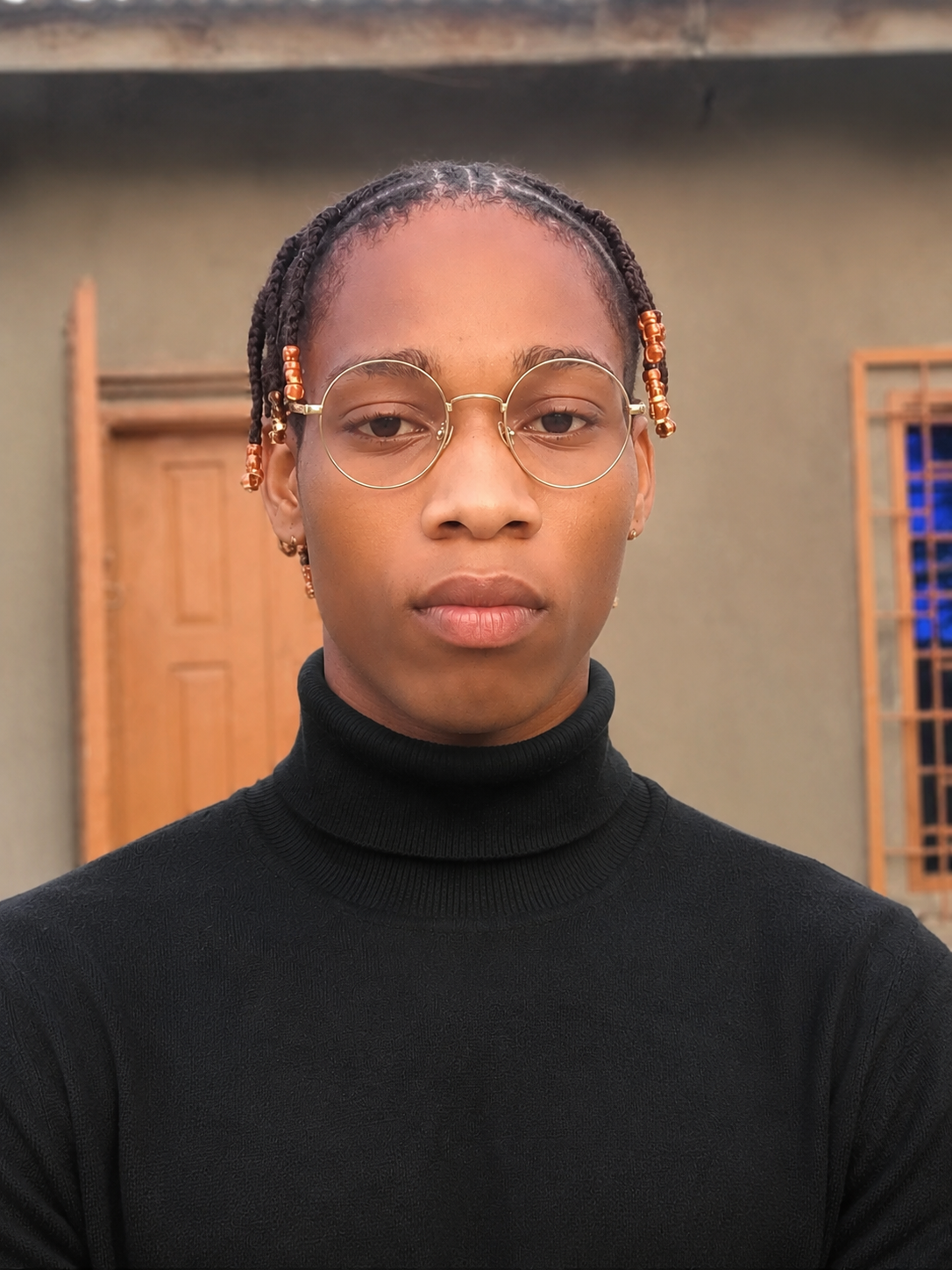
From Benin to the Bitcoin Community: G. Maurice's Vision for Humanitarian Bitcoin Adoption
Bitcoin is becoming increasingly global, but its reach is still uneven.
Millions of people around the world are learning about Bitcoin, building businesses around it, developing new technologies and participating in a rapidly growing global community.
Yet there are also communities that remain far removed from this ecosystem.
For G. Maurice, this gap represents more than a technological challenge. It represents an opportunity to connect Bitcoin with people, communities and humanitarian needs that are often overlooked.
That vision is one of the foundations behind Bitcoin In Orphanages (BIO).
Starting From Benin
The story of BIO is closely connected to Africa and, more specifically, to humanitarian realities that G. Maurice has encountered in his environment.
In communities where resources can be limited, orphanages and vulnerable families may face challenges that are immediate and practical: access to food, school materials, medical care, clothing, clean water, adequate facilities and educational opportunities.
These realities create a very different perspective on technology.
When technology is discussed from a distance, it can appear abstract.
When it is connected to a real human need, its potential becomes easier to understand.
This is part of what motivated G. Maurice to explore the relationship between Bitcoin and humanitarian action.
Why Humanitarian Bitcoin Adoption Matters
Bitcoin adoption is often measured through wallets, transactions, businesses, exchanges, investment and market activity.
But adoption can also mean something much more fundamental:
Helping someone understand what Bitcoin is and giving that person the knowledge to decide whether it can be useful to them.
For G. Maurice, this distinction matters.
People should not be introduced to Bitcoin simply because someone wants them to receive a donation.
They should have the opportunity to understand the technology, its possibilities, its responsibilities and its limitations.
Education therefore becomes an essential part of humanitarian Bitcoin adoption.
From Receiving Bitcoin to Understanding Bitcoin
There is a significant difference between receiving Bitcoin and understanding Bitcoin.
A person can receive a transaction without knowing how Bitcoin works.
But knowledge can create independence.
Understanding wallets, transactions, private keys, security and basic Bitcoin principles can allow people to interact with the technology with greater awareness.
This is why BIO does not want humanitarian support to stop at the moment a contribution arrives.
The broader objective is to create opportunities for education, understanding and responsible adoption.
A humanitarian contribution can solve an immediate need. Knowledge can remain with a person long after that contribution has been used.
Building a Bridge Between Two Communities
One of the central ideas behind BIO is to connect communities that do not always interact with one another.
On one side is a global Bitcoin community made up of users, educators, developers, businesses, organizations, donors and advocates.
On the other side are orphanages, vulnerable families and humanitarian communities that may have limited exposure to Bitcoin.
BIO seeks to build a bridge between these two worlds.
The bridge is not intended to be built only with money.
It can also be built through education, communication, partnerships, documentation, technology and human relationships.
Humanitarian Work Comes First
Bitcoin is an important part of BIO, but it does not replace the humanitarian purpose of the project.
The starting point remains human need.
When children need food, they need food.
When children need school supplies, they need school supplies.
When someone needs medical assistance, the humanitarian priority is the person and the care required.
Bitcoin becomes a tool that can help connect people who want to contribute with initiatives addressing those needs.
This distinction is important because technology should serve people rather than become more important than the people it is supposed to help.
What Adoption Can Look Like in Practice
Humanitarian Bitcoin adoption can take different forms.
Education
People can be introduced to the basic principles of Bitcoin and learn how the network works.
Practical Use
People can learn how Bitcoin can be received, stored and used responsibly.
International Participation
Communities can become connected to supporters and organizations located in other countries.
Community Building
People can become part of a broader network of individuals who share knowledge, resources and opportunities.
These elements can gradually transform Bitcoin from something unfamiliar into something understandable.
Learning Through Real Humanitarian Action
Education becomes more meaningful when it is connected to reality.
That is why BIO seeks to document its humanitarian work.
One documented initiative involved the distribution of school kits to 54 children living in an orphanage.
Other humanitarian activities have included meal distributions and support for orphanages and vulnerable communities.
These actions provide an opportunity to demonstrate something that is often missing from discussions about technology: the connection between digital networks and physical human lives.
A Bitcoin transaction may exist digitally.
Its consequences can exist physically.
A contribution can become food.
It can become school materials.
It can contribute to medical care.
It can support improvements to a living environment.
And it can create an opportunity for someone to learn about a technology that may previously have been completely unfamiliar.
Why Africa Matters to This Vision
Africa is often discussed in relation to Bitcoin through adoption statistics, financial inclusion and emerging technology.
But the continent should not be reduced to statistics.
It is home to communities, entrepreneurs, developers, educators, humanitarian workers and young people building their own futures.
For G. Maurice, the opportunity is to contribute to that wider conversation from within Africa rather than simply observing it from outside.
BIO is therefore being developed with African humanitarian realities in mind while maintaining an international outlook.
From Local Experience to Global Community
A humanitarian initiative can begin locally while developing a global ambition.
The needs may be identified in one community, but the people capable of contributing knowledge, resources or support may live thousands of kilometres away.
This is where the global nature of Bitcoin becomes particularly interesting.
A supporter does not necessarily need to live in the same country as the community being supported.
A Bitcoin educator does not necessarily need to be physically present to begin teaching.
A partnership can begin across borders.
And a humanitarian story can reach people who would otherwise never have known that the need existed.
This is the international bridge G. Maurice wants BIO to continue building.
Transparency as a Foundation
Connecting Bitcoin with humanitarian action also creates an important responsibility.
People who contribute deserve clarity about the initiatives they are supporting.
For BIO, transparency means documenting activities whenever possible and making the relationship between contributions and humanitarian action visible.
The objective is not to create the appearance of perfection.
The objective is to show the work honestly: what was done, who was supported, what needs remain and what still has to be built.
A Vision Beyond Donations
The long-term ambition of BIO is therefore broader than fundraising.
It is about creating a sustainable relationship between Bitcoin, humanitarian action and education.
It is about giving people an opportunity to contribute while also giving them an opportunity to learn.
It is about helping humanitarian communities become visible to an international audience.
And it is about demonstrating that Bitcoin communities can participate in causes that extend beyond financial markets.
The Role of the Bitcoin Community
No single person can build an international humanitarian network alone.
BIO needs people who can contribute in different ways.
Some can contribute financially.
Others can contribute education.
Others can contribute technology, design, communication, media, logistics, partnerships or local knowledge.
Every contribution does not need to look the same.
The strength of a global community comes from the different abilities of the people within it.
What Comes Next
The next stage of BIO is focused on strengthening humanitarian missions, developing partnerships, expanding education and connecting more communities with the international Bitcoin ecosystem.
The ambition is gradual and deliberate.
Build.
Document.
Learn.
Improve.
Connect.
Repeat.
For G. Maurice, this process is more important than creating an image of having already achieved everything.
The project is still being built.
A Humanitarian Bitcoin Vision From Africa
The future G. Maurice envisions is one in which Bitcoin is not only understood as a financial network, but also recognized as a technology that can facilitate connections between people across borders.
A future where someone in Africa can learn from someone in Europe.
Where a Bitcoin community in North America can support a humanitarian initiative in Africa.
Where education can travel across borders.
Where humanitarian organizations can access new communities of supporters.
And where technology can remain connected to the people it is ultimately meant to serve.
Bitcoin can connect networks. Human beings give those connections meaning.
About G. Maurice
G. Maurice is the founder of Bitcoin In Orphanages (BIO), a humanitarian Bitcoin initiative connecting Bitcoin communities with orphanages and vulnerable communities through humanitarian assistance, education, transparency and community participation.
His work focuses on exploring how Bitcoin can be connected to real-world humanitarian action while helping more people understand and responsibly use the technology.